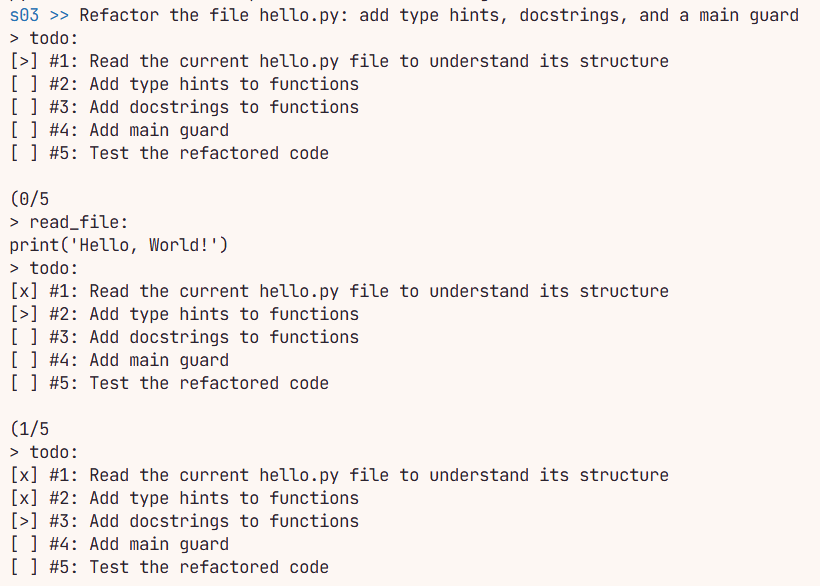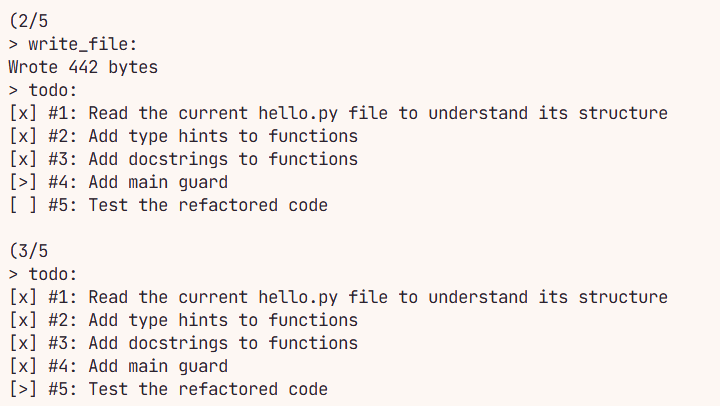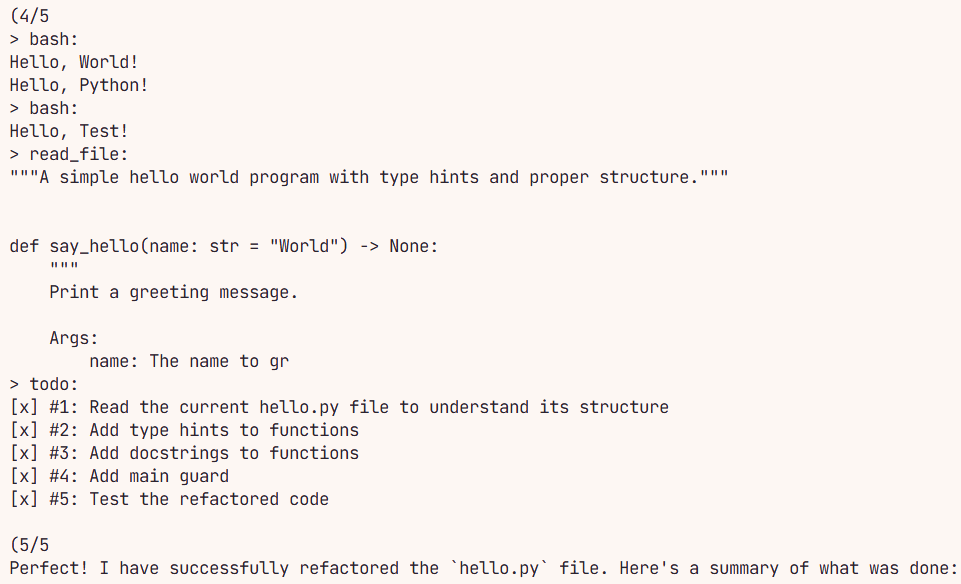
概念引入
多步任务中, 模型会丢失进度 – 重复做过的事、跳步、跑偏。对话越长越严重: 工具结果不断填满上下文, 系统提示的影响力逐渐被稀释。一个 10 步重构可能做完 1-3 步就开始即兴发挥, 因为 4-10 步已经被挤出注意力了。
“没有计划的 agent 走哪算哪” – 先列步骤再动手, 完成率翻倍。
Harness 层: 规划 – 让模型不偏航, 但不替它画航线。
有点像在 ReAct 模式上结合 Plan and Execute 的模式的感觉。
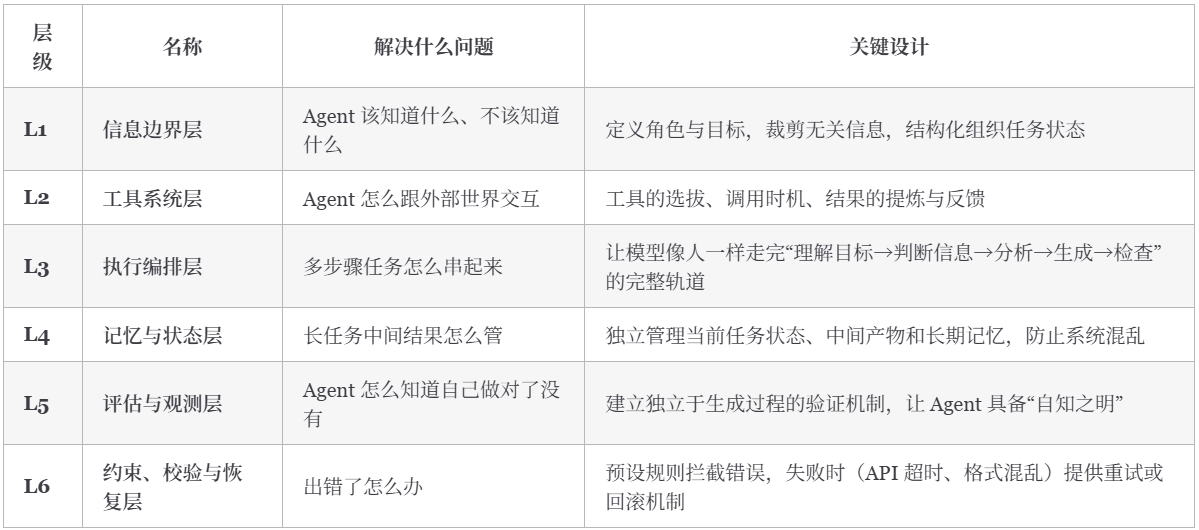
Harness 层次
s03 属于 Harness 的 L3 层,执行编排层。
具体实现
s03 通过设计了一个TodoManager,然后作为工具引入,注册到工具路由中,由 LLM 进行主动调用来管理这个规划列表。
Todo list 的预期效果
1
2
3
4
5
6
+-----------+-----------+
| TodoManager state     |
| [ ] task A            |
| [>] task B  <- doing  |
| [x] task C            |
+-----------------------+
列表存在多项任务(字符串描述),每项任务有一个状态( pending / in_progress / completed ) in_progress 只能有唯一一项。
因此TodoManager需要内置一个列表数据结构用以存储待办事项。
1
2
3
class TodoManager:
    def __init__(self):
        self.items = []
TodoManager需要对外开放两个方法,首先是update方法,由 LLM 行调用,更新整个待办列表。
1
2
3
4
5
6
7
8
9
10
11
12
13
14
15
16
17
18
19
20
21
22
23
def update(self, items: list) -> str:
    # 设定最大待办事项数量
    if len(items) > 20:
        raise ValueError("Max 20 todos allowed")
    validated = []
    in_progress_count = 0
    # 遍历LLM输入的待办事项列表,对每个项进行合法性检验,同时保证in_progress只能有唯一一项
    for i, item in enumerate(items):
        text = str(item.get("text", "")).strip()
        status = str(item.get("status", "pending")).lower()
        item_id = str(item.get("id", str(i + 1)))
        if not text:
            raise ValueError(f"Item {item_id}: text required")
        if status not in ("pending", "in_progress", "completed"):
            raise ValueError(f"Item {item_id}: invalid status '{status}'")
        if status == "in_progress":
            in_progress_count += 1
        validated.append({"id": item_id, "text": text, "status": status})
    if in_progress_count > 1:
        raise ValueError("Only one task can be in_progress at a time")
    self.items = validated
    # 渲染更新后的待办列表
    return self.render()
可以看到update方法最后还会进行render方法之后返回 LLM ,这是为了保证待办事项的最新状态会返回给 LLM ,在 LLM 上下文中位于最新的区域中,不至于遗忘和跑偏,让 LLM 去处理规划中当前应该做的任务。
1
2
3
4
5
6
7
8
9
10
def render(self) -> str:
    if not self.items:
        return "No todos."
    lines = []
    for item in self.items:
        marker = {"pending": "[ ]", "in_progress": "[>]", "completed": "[x]"}[item["status"]]
        lines.append(f"{marker} #{item['id']}: {item['text']}")
    done = sum(1 for t in self.items if t["status"] == "completed")
    lines.append(f"\n({done}/{len(self.items)} completed)")
    return "\n".join(lines)
注册到 TOOLS dispatch map中,要求 LLM 调用时需要三个参数(id, text, status),同时要求 status 是 pending, in_progress, completed 中的一个。
1
2
3
4
5
TOOLS = [
    ...,
    {"name": "todo", "description": "Update task list. Track progress on multi-step tasks.",
     "input_schema": {"type": "object", "properties": {"items": {"type": "array", "items": {"type": "object", "properties": {"id": {"type": "string"}, "text": {"type": "string"}, "status": {"type": "string", "enum": ["pending", "in_progress", "completed"]}}, "required": ["id", "text", "status"]}}}, "required": ["items"]}},
]
同时在系统提示词中提到让 LLM 去调用 todo 工具去计划多步任务。
1
2
3
SYSTEM = f"""You are a coding agent at {WORKDIR}.
Use the todo tool to plan multi-step tasks. Mark in_progress before starting, completed when done.
Prefer tools over prose."""
Nag注入
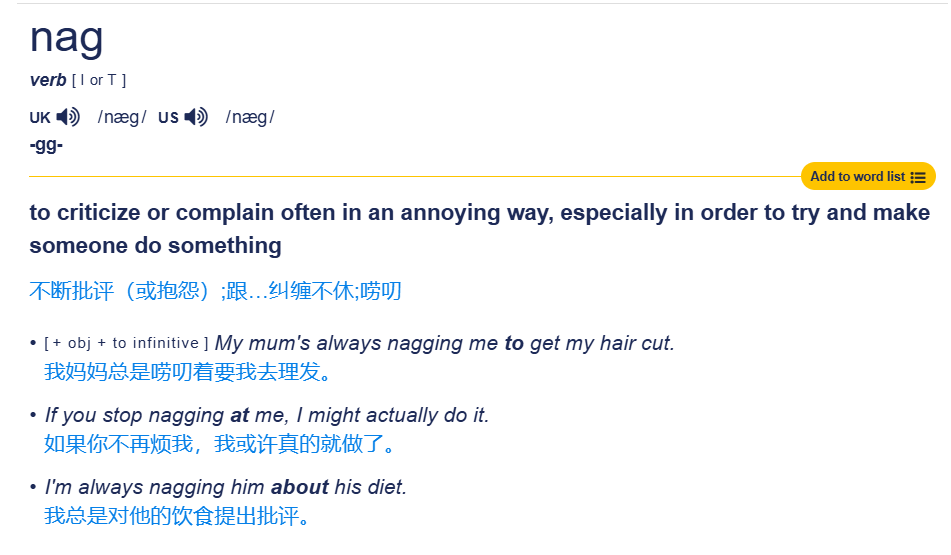
如果在一个步骤中执行过长,可能会导致 LLM 忘记调用TodoManager工具来更新待办事项的状态。在 s03 中,我们可以通过nag reminder,模型连续 3 轮以上不调用 todo 时注入提醒来催促 LLM 去调用 todo 工具来更新待办事项的状态。
1
2
3
4
5
6
7
8
9
used_todo = False
for block in response.content:
            if block.type == "tool_use":
                ...
                if block.name == "todo":
                    used_todo = True
rounds_since_todo = 0 if used_todo else rounds_since_todo + 1
if rounds_since_todo >= 3:
            results.append({"type": "text", "text": "<reminder>Update your todos.</reminder>"})
nag reminder 制造问责压力 – 你不更新计划, 系统就追着你问。
效果演示